The AI-Amplified BIM & VDC Professional — Smarter Project Delivery
In today’s competitive AEC (Architecture, Engineering, and Construction) landscape, simply adopting BIM is insufficient. True transformation occurs when companies integrate AI from the “bottom up.” This approach empowers the BIM Modelers and VDC Engineers performing the work to lead the change.
At Bold Business, we are moving away from fragmented apps toward a cohesive “Second Brain” architecture. This central repository ensures that project data, from Revit parameters to site logistics, is never siloed. Consequently, our BIM and VDC teams can transition from manual labor to high-value strategic coordination and modeling.
AI Amplification: Evolution of the BIM & VDC Workflow
The Bold AI Workbench has fundamentally shifted the daily operations of our design and construction professionals. Below are the “Amplification Stories” that demonstrate this practical impact:
1. Automated Model Auditing and Code Compliance
The Old Way
BIM Modelers and VDC Engineers spent days manually searching municipal websites for zoning, permits, and building code requirements.
The AI Edge
With the Code and Permits Researcher, professionals input locations to receive instant summaries of ADA requirements and submittal checklists.
The Results:
As a result, teams now complete multi-day research tasks in minutes.
2. Intelligent Space Planning and Design Logic
The Old Way
Balancing ergonomic standards with complex MEP (Mechanical, Electrical, Plumbing) coordination required extensive manual referencing of trends and technical manuals.
The AI Edge
The Smart Research Assistant provides data-backed recommendations for spatial layouts. These suggestions ensure ADA compliance and optimal clearance for construction equipment.
The Result:
BIM Modelers instantly validate complex space requirements. Therefore, they ensure every model is structurally sound and compliant before a single clash is run.
3. Real-Time Concept Visualization
The Old Way
Rendering specific architectural concepts or site logistics was slow. Furthermore, any minor change to a structural element required the VDC Engineer to restart complex CAD or Navisworks files.
The AI Edge
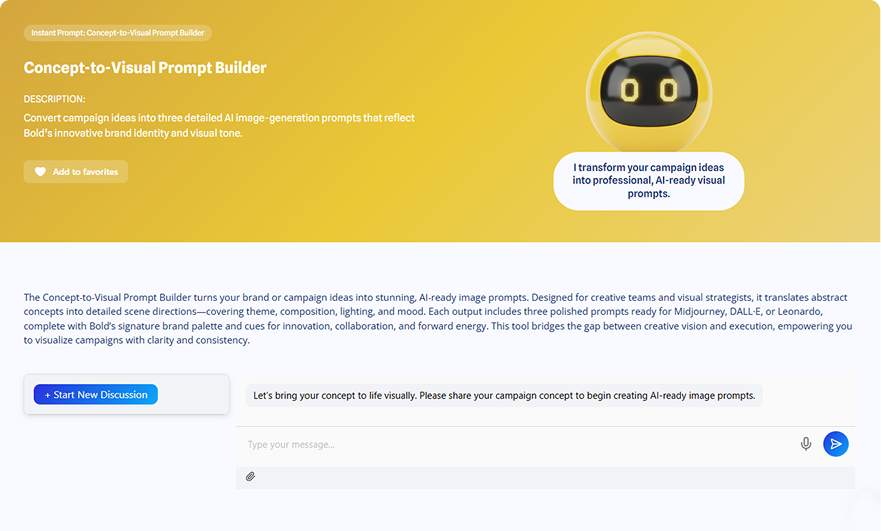
The Concept to Visual Prompt Builder generates high-fidelity mockups instantly. By using Gemini 3 Flash, professionals can modify items like facade materials or site staging live during client presentations. Additionally, you can add a note in the prompt to reference the latest manufacturer online catalogs. This ensures the AI only creates mockups with actual products from the catalog.
The Results:
Instantaneous visual feedback eliminates the “rendering wait time.” Consequently, clients finalize design decisions in a single session, which slashes the revision cycle from days to minutes
4. Smart Productivity and Task Management
The Old Way
BIM and VDC teams often felt overwhelmed by complex project queues and clash detection reports. Because of this, they struggled to prioritize their work effectively.
The AI Edge
The Smart Priority Planner analyzes digital to-do lists to recommend a strategic daily order. Moreover, it explains the “why” behind task urgency.
The AI Edge
Professionals maintain a high-impact focus. This ensures they meet critical project deadlines and construction milestones with precision while eliminating the mental fatigue of manual queue management.
Engineering the Edge: The BAIIT Development Process
The Bold AI Integration Team (BAIIT) custom-engineers the tools within the Bold AI Workbench specifically for the BIM and VDC industry. Their specialized workflow includes:
Workflow Architecture: The team identifies labor-intensive subtasks, such as spec data entry, that are ripe for automation.
Proprietary Prompt Engineering: BAIIT builds “Guided Builders” and “Agentic Workflows.” These tools produce professional-grade PDFs and design decks.
Python Scripting & Data Extraction: We use Python to extract project data from emails and BIM schedules directly into the “Second Brain” environment.
Manufacturer Integration: The team trains tools on specific catalogs. This ensures that AI visuals remain accurate and buildable.
The "Crusher" Value Proposition: Why AI-Amplification Matters
By utilizing AI-Amplified BIM Modelers and VDC Engineers, clients access a unique “Crusher” Value Proposition. This represents the powerful combination of global labor arbitrage and massive productivity gains.
Through the continuous refinement of the BAIIT team, our professionals become more efficient and output becomes more accurate. Finally, this integration slashes time-to-proposal from days to minutes, giving our clients a significant competitive edge in the modern construction market.